I began with FIRST Robotics, then designed tools and fixtures for medical-device manufacturing at Applied Medical.
Applied Medical: tooling, fixtures, automation
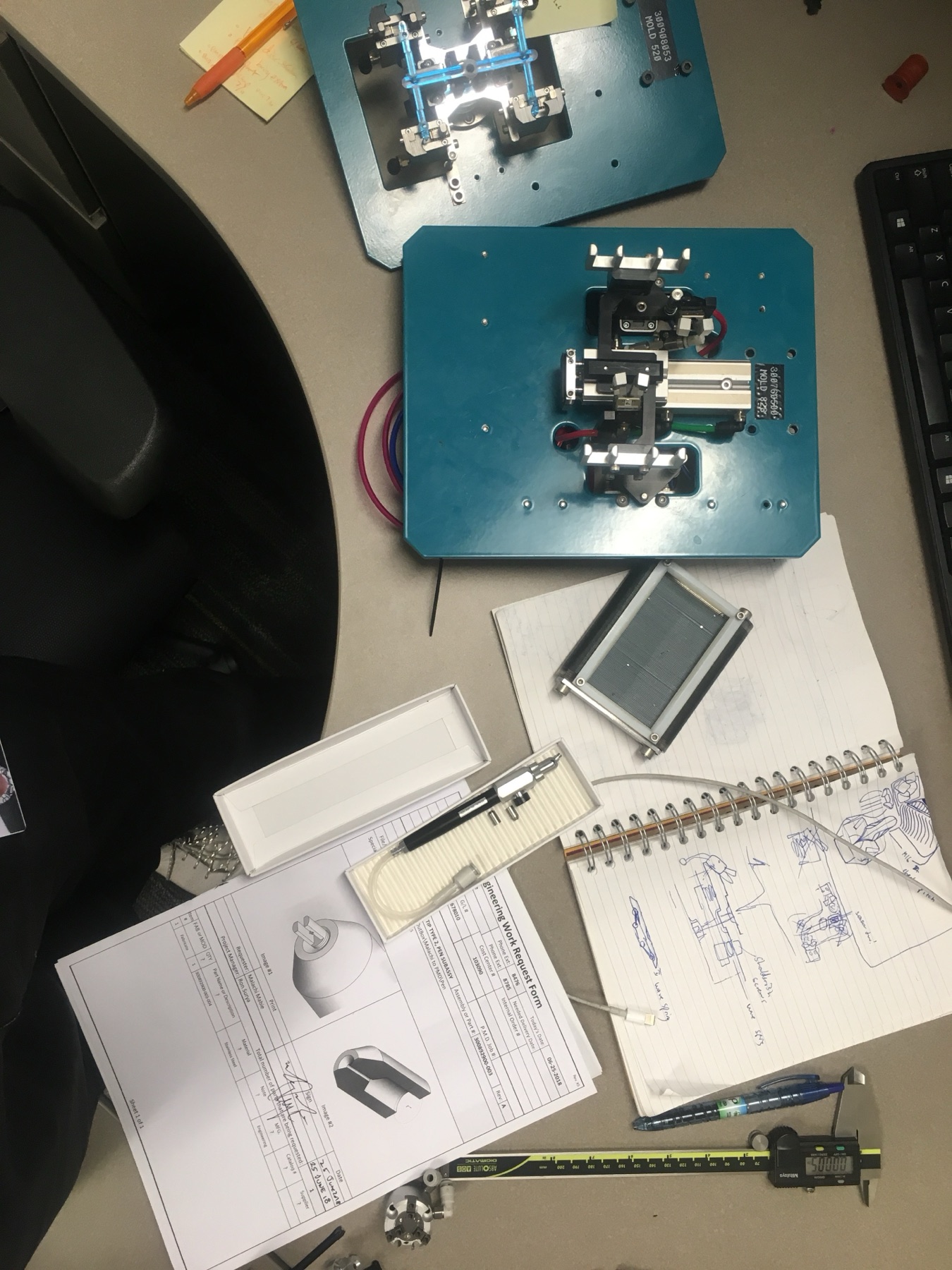
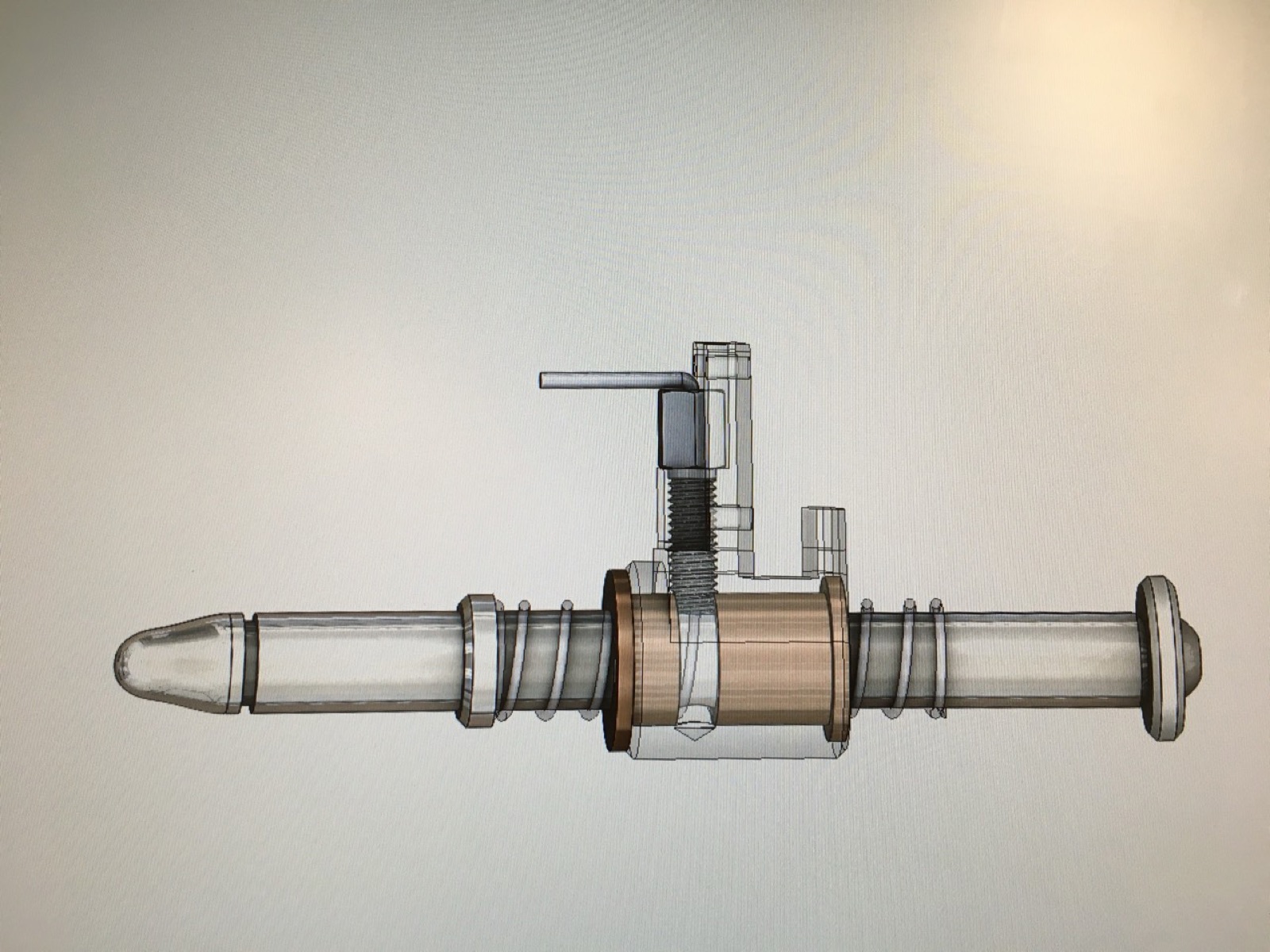
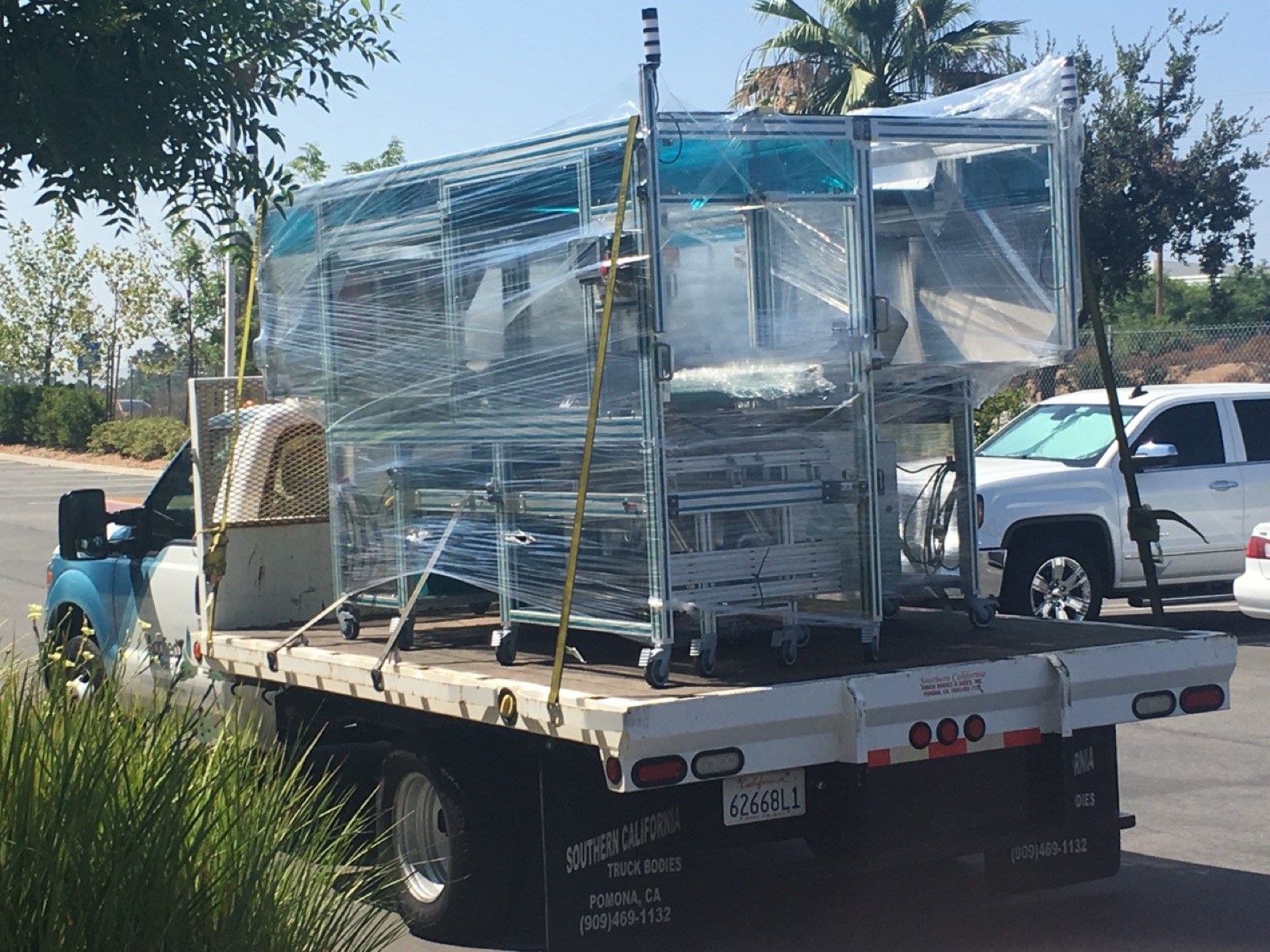
From 2013 to 2018 I worked in mechanical design and process engineering at Applied Medical, moving from intern to technician to engineer while studying physics. The work sat close to production: robotic tooling, pneumatic manipulators, fixtures, end-of-arm tooling, CAD, prototypes, test and qualification, and shop-floor troubleshooting.
MIM variance project
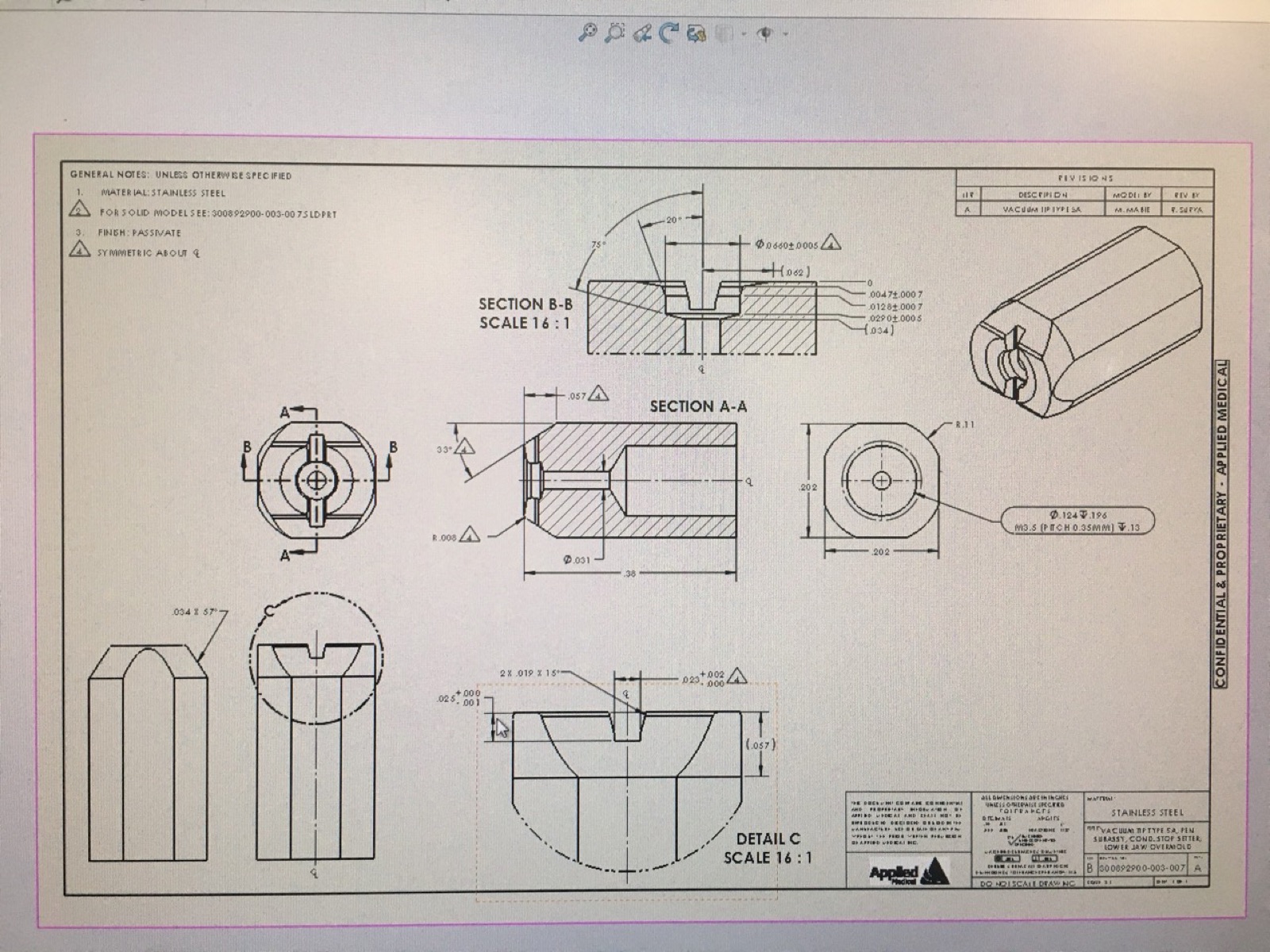
A metal-injection insert-molding process fix used a 3D-printed orientation grid, fishing-line sorting geometry, and stainless suction-pen tips to reduce operating variance by roughly $100k/month.
FIRST Robotics and LEGO roots
Before Applied Medical, FIRST Robotics taught design under time pressure. On FRC Teams 1425 and 3476, I co-led mechanical design work including intake, drive, and superstructure. The team won a Newton Division World Championship, IRI Championship, and Industrial Design Award; that work led directly to the Applied Medical internship.